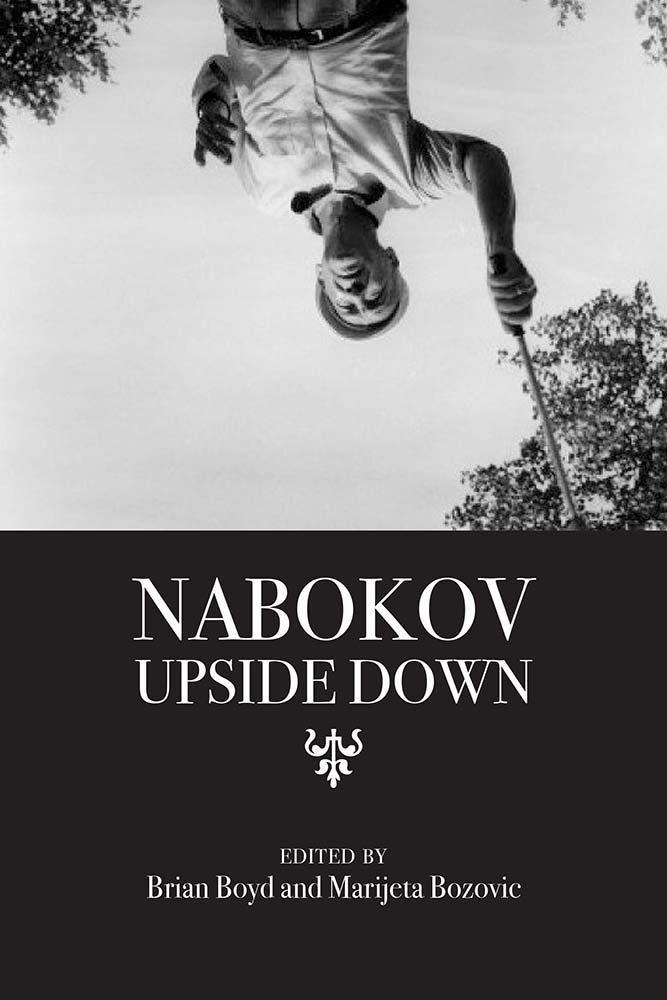
 This book argues that ideology is a prism through which the work of Vladimir Nabokov needs to be considered. It is thus the first attempt to foreground questions of ideology and politics within a field that has historically been resistant to such readings.
The perception of Nabokov as an apolitical writer is one which the author encouraged throughout the latter part of his career in his non-fictional writings and in the small number of well-rehearsed interviews that he gave. When questions of ideology and politics have arisen in scholarship, they have only been featured in passing or have merely re-confirmed the author’s self-designation as an «old-fashioned liberal». When we consider that Nabokov lived through some of the most traumatic historical ruptures of the past century then this lack of reference to ideology in the critical literature appears quite revealing.
Through the analysis of works which have previously received little attention as well as new perspectives on better known works, this book demonstrates how ideology and politics were ever-present and had an indelible effect on Nabokov’s literary aesthetics.


 “Jusqu’à présent, les études nabokoviennes ont tendance à ignorer l’influence de la culture allemande sur l’œuvre de Vladimir Nabokov. Ce faisant, elles se conforment aux propos de l’écrivain qui a fréquemment déclaré que, malgré ses quinze années passées en Allemagne (1922–1937), il a toujours évité tout contact avec la langue et l’univers allemands. Pourtant, bien que l’émigration russe à Berlin vive en vase clos, les frontières entre les mondes russe et allemand ne sont pas si étanches, ce qui apparaît nettement dans les fréquentes allusions littéraires de l’écrivain à des œuvres de littérature, de cinéma et de peinture allemandes.Le présent ouvrage a donc pour objectif de lire l’œuvre de Nabokov dans le contexte de l’art allemand de la fin du XIXe et du début du XXe siècle, notamment de l’esthétique expressionniste et de trois de ses grands thèmes majeurs, à savoir l’altération du psychisme humain, l’ambivalence de la figure féminine et la représentation de la grande ville. Il vise ainsi à proposer une nouvelle interprétation des œuvres russes de Nabokov, à reconstruire le contexte culturel berlinois (cinéma et peinture) dans lequel ces dernières furent créées et à montrer que l’écrivain n’était pas si hermétique à la culture allemande qu’il voulait bien le laisser entendre.”

 erary criticism has mainly oscillated between “the death of the author” (Barthes) and “the return of the author” (Couturier), this work suggests another perspective on authorship through an analysis of Nabokov’s prefaces. It is here argued that the author, being neither dead nor tyrannical, alternates between authoritative apparitions and receding disappearances in the double gesture of mastery without mastery which Derrida calls ‘exappropriation’, that is, a simultaneous attempt to appropriate one’s work, control it, have it under one’s power and expropriate it, losing control by loosening one’s grip. The intention of this is to approach, through one’s experience of reading and interpreting, the experience of self-effacement and impersonality pertaining to writing (cf. Blanchot). Prefaces are considered to be suitable places for the deconstruction of the classical image of Nabokov’s arrogance through the unearthing of his reserve and vulnerability. This work provides an account of the mere intuition (which, therefore, does not pretend to be a conclusive and definitive interpretation) of another image of Nabokov whose undeniable talent for deception seems in accordance with a need for discretion and secrecy.”